Viking cooking
Viking oven baking unevenly.
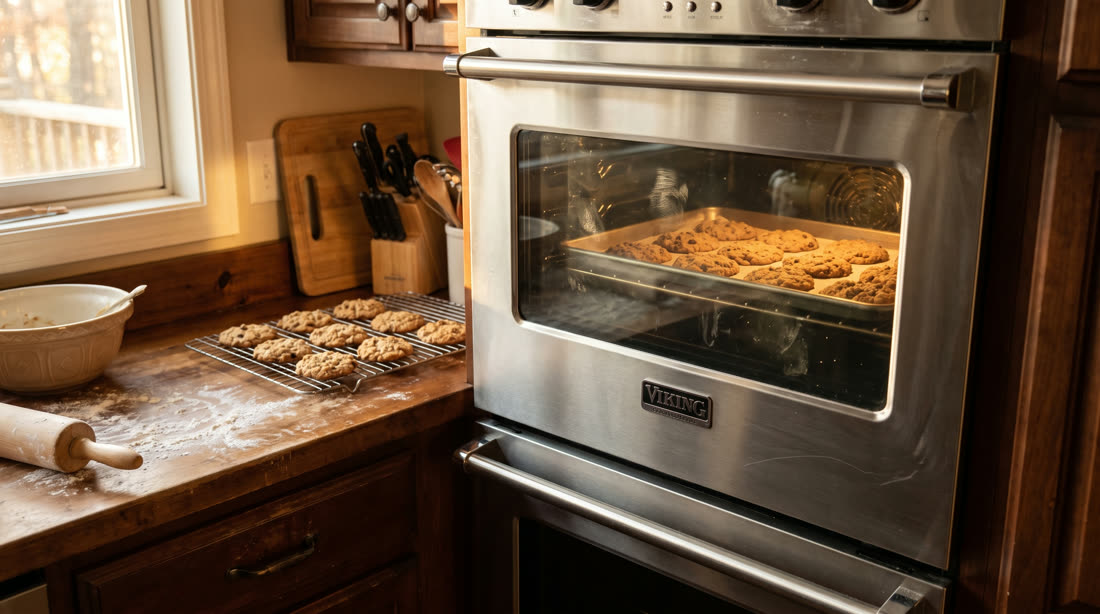
One tray browns while the other stays pale. The oven is telling you which part is tired.
Viking cooking
One tray browns while the other stays pale. The oven is telling you which part is tired.
Uneven results in a Viking oven come from a short list. A convection fan that slowed or stopped, an element heating on only part of its length, a temperature sensor drifting out of spec, or a door that no longer seals evenly.
The fix starts with measurement. We map the cavity temperature, watch the fan under load, and check the door across its full frame. Then we replace what failed and verify the oven against factory calibration before we call it done.
The fan spins slow or stalls when hot, so air stops circulating and one zone bakes ahead of the rest.
An element can fail along part of its length and still glow. Half the cavity gets robbed of heat.
The set temperature and the real temperature drift apart over the years. We measure and reset it to spec.
A gasket worn on one side or a sagging hinge lets heat spill from one corner of the cavity.
That pattern points at airflow or an element, not your recipe. A convection oven should bake tray to tray with almost no variation. When it stops doing that, a component has changed.
Yes, and it is gradual enough that most people adapt without noticing. If you have learned to set 350 when the recipe says 375, your oven has already told you.
Every time. No oven leaves our care without its measured temperature matching the dial.
One call and it is off your list. Open daily, 7am to 7pm.
Same day windows go to whoever calls first. The $89 diagnostic folds into your repair, so finding out costs nothing extra.